

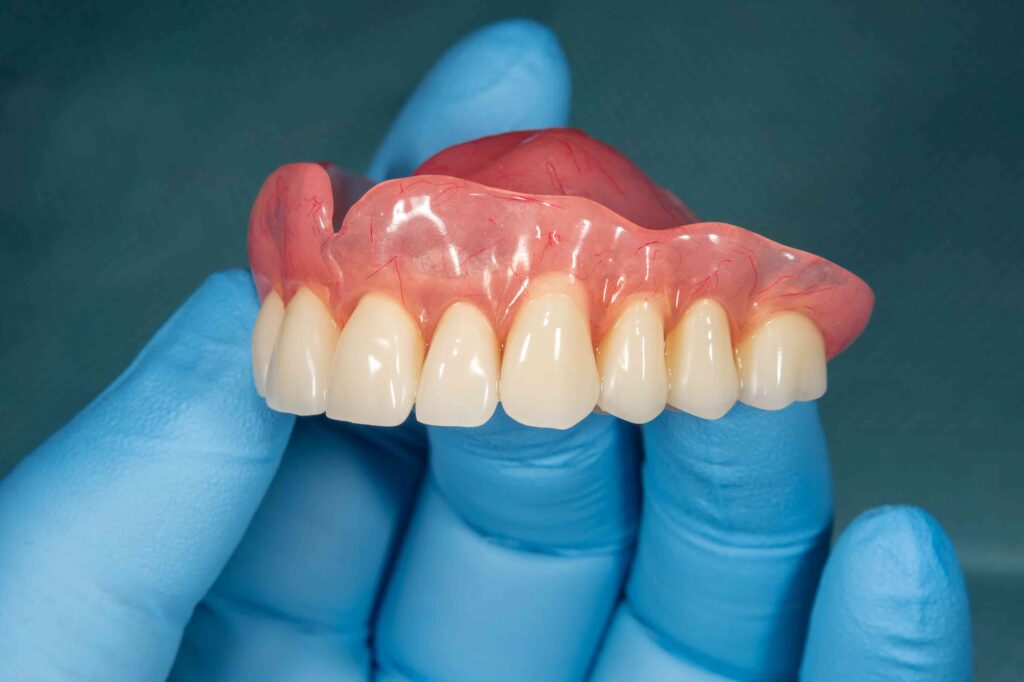
When the supporting structures of the mouth change over the years, your dentures might not fit as well as they did when you got them. If this is the case, it’s always best to consult with your dentist to see if it is time for a reline or replacement. Until then, denture adhesives can be used to provide temporary security for your smile – but how does it work? Read on to learn more about denture adhesives and how they work.
How to Put in Your Dentures with Denture Adhesive
The way you use denture adhesive will depend on the type that you use. Here are the three different types of adhesives.
Denture Adhesive Cream
Denture adhesive cream comes in a tube and can seal out approximately 74% of food particles. To use it, apply the cream in short strips on the undersurface of the dentures. Press and hold them into place and bite done to firmly secure them to your gums. This type of adhesive can hold all day by forming a thin, strong layer and prevents gum irritation. The most common complaint about this option of that it can ooze if you accidentally apply too much of it.
Denture Adhesive Powder
Powders are a great alternative to creams. They hold dentures firmly in place for up to 12 hours. Start by dampening your denture plates. This will give the adhesive a moist surface to stay in place. Sprinkle the powder into the plate. You can either cover the whole thing with a sprinkling of powder or just put it in an area that feels loose. The natural wetness in your mouth activates the powder and makes it sticky so the denture can stay in place. These can be slightly messier than other options, but they are still highly effective.
Denture Adhesive Strips
Denture adhesive strips need to be cut to the correct size and layered in your denture. Once they are secured, you can put your dentures in your mouth. The strips should help to provide a strong grip on your gums. These generally receive good reviews but tend to be a little bit more costly than their alternatives.
How Do You Remove Your Dentures?
- Place a towel on the counter. Dentures can be slippery as you take them out, so this can offer another layer of protection if they fall.
- Rinse your mouth with warm water or mouthwash. This helps to dissolve the adhesive and make your dentures easier to remove.
- Begin with your lower denture. You should pull gently while applying a rocking motion.
- Next, remove your upper denture. To do this, place your thumb against your front teeth. Press both upward and outward in the direction of your nose.
- Thoroughly clean your dentures after removing them with warm water, a soft-bristled toothbrush, and toothpaste.
If your dentures aren’t fitting how they previously did, denture adhesive can be a helpful tool. With a little bit of practice, you will get the hang of it in no time.
About the Practice
At Advanced Dental Concepts, Dr. Danny Hayes, Dr. Christine Mousa, and Dr. Allison Lent work together to treat patients in the Crown Point community. With their combined experience and expertise, patients can get pretty much anything they need under one roof. To learn more about dentures or to schedule an appointment, visit their website or call (219) 663-6878.